Mary
I stopped believing in Omma’s God the day she covered herself in plastic wrap. When I was younger, Dad used to pick me up from middle school around three in the afternoon, his poorly hidden shooter bottles laying across the floor of the backseat. His breath was hot and his cadence mean—I did not talk to Dad, then. We only yelled. Screamed loud enough until one of us cried—who would break first? Me, knowing this, and him, desperate to drink, would both coalesce rather simply to the idea of dropping me off at Omma’s after school, leaving him to do God knows what with the drug dealers that lived further down on Fulton. Just seven houses down and he’d get his fix. Only had to figure out what to do with me, first. The only issue was that Omma, at that time, had fallen quite far off of the wagon. In fact, I recall thinking that a wagon wasn’t high enough. That it would make more sense to say she fell off a very high trampoline, or a cliffside, perhaps a telephone pole or even heaven. Gracefulness never had less of a place than with her during my sixth, seventh and eighth grade school years.
At twelve years old I want everything to go back to how it once was. By everything, of course, I mean Omma, because that’s what she is, what I still hope she has the capacity to be. She is happiness and laughter. She is puppies and dandelions and too-sweet-frosting. She is game shows on the television and Polly Pocket playtime after coffee. I wanted to believe that if I kept reminding her of who she was, maybe she’d come back to me. Like a hiker in a storm, bundled in freeze and swarmed with snow too heavy to see through—Omma, let me be your light. Let me be your guide. Please, please, please. Return home.
But Omma, now, is different. Omma’s chocolate spirals atop her head are now fried, a weird drug haze of spontaneity causing her to douse her head in hydrogen peroxide—she asks me what I think of her hay hair. I don’t quite know what to say. It is dry and brittle and the most unappealing shade of piss yellow I’ve ever seen. Omma doesn’t curl her hair anymore.
Omma also gains weight in the most unnatural way and wears clothes that don’t match. Her stomach juts out in a bulb, an unfitting chunk of beer-bound gluttony attached to her front. Today, she is wearing a stained wife beater tank top and black bermuda shorts from the Dollar General on Washington. On her feet, she wears hot pink flip flops with poorly patched up glue marks, her toenails uncut and unpainted. I am sitting at the dining table in the kitchen, at this point unwilling to venture into the living room to watch TV. Omma slurs now, consistently, making all conversation uncomfortable and insincere. Her words tilt and turn in all of the wrong places, like her mouth has too much spit, like her teeth don’t quite fit. Oftentimes she’ll scream from her place on the sofa, begging me to join her, to spend time with her. Her hands stretch out towards me from the end of the hallway but I keep mine stuck to the table. I refuse in the name of tough love. She may cry but I cannot. I turn away and stare at my notebooks, the patterns in the wood, my cuticles and the cat litter under my feet. Just anything but her. She must find her own way out of the storm. I am convinced that this is how she will get better.
Though on that day, in her flip flops, Omma’s peroxide hair is up in a ponytail and she is standing in the kitchen with me. The room smells like cat feces, beer, and the tiniest hint of garlic from the Marco’s pizza box that has been on the washer for over a month—becoming a piece of furniture itself. Dad is there too, and as I attempt to avoid eye contact in hopes that time might pass quicker, Omma begins to talk, taking out a container of Saran Wrap, and unraveling its contents to weave around her torso, mainly her stomach. Dad and I are confused, but she keeps going, saying, “God told me this would make me skinny.” In a feat of drastically improbable odds, my father and I are on the same page as we look at her like some sort of sick dog. Oblivious to pitiful eyes, Omma stays smiling and wraps herself in plastic, convinced by the Lord that it would help to shrink her stomach back to its once natural place while I watch in horror. Maybe horror isn’t the right word, or maybe it is, but it’s something quietly devastating, something that I knew was coming for a very long time. No cheap tricks, no jumpscare—it was a slow growing crescendo. Our inevitable little doomsday had finally come.
Dad watches with tears in his eyes and says to her, “But Mom, you’re beautiful now.” And I hate that I agree with him, hate that I can see the palpable pain wafting off of his body in waves. I hate that even through the change I can still see her—that Omma’s eyes are still hers and that sometimes I hear just a glimpse of the same laugh I used to, like remembering an old song. I hate that she still feeds her cats in the morning before anything else, that she still drinks her coffee sweet. I hate that after all of these years she still keeps my childhood puzzles in her tall cabinet, that she still stores her bible in her bedside drawer, and that she still loves me. I hate that I hate so much because I know that hatred is sinful but what else am I supposed to do? Forgive? Forget? Agree? Disagree? Lie through my teeth? What do you do when you can’t trust God to guide? I hate myself for even asking such a question. For questioning at all. I say nothing.
As she continues to cloak herself, Dad leaves and I am forced to watch her follow him into the living room, a makeshift tail following behind her like some poorly made costume. Like a suit that doesn’t fit, skin she shouldn’t be wearing. I think that God is a fucking joke. I think that God is delusional and malicious and likes to watch me squirm under his shoe. What kind of Lord would lie? What kind would make me watch? I want to pray but I am the only one at the table.
I realize that the dread I feel is due to the fact that, for the first time, I know that Omma is going to die. I hear her turn on the television. I think that I should be doing more, somehow. That if God can’t save her I have to. She picks up a can from the coffee table—Busch, the cheap stuff. I think about heaven and hell, which one someone like Omma would go to. Where would her God sentence her after she took his duplicitous word? Who is to blame and why do I think it’s me? I look at her from my seat, sat upright on the sofa, back straight and stomach glistening with reflected light, a twisted halo surrounding her gut like some sick kind of foreshadowing. I turn around and lay my head in my arms.
Today, even God appears to be drinking.

The God that raised me was unkind. I have worked for over half of my life to attempt to
dismantle the damage that religion pushed onto my young psyche. Many years ago, I came to the conclusion that God is, and should be, something intensely personal. With that being said, take what I say here with a grain of salt. Your universe is your own to be perceived. Your God is yours to find (or not, that’s cool, too).
I found that in subscribing to the idea of individual relationships with God, I had opened an even bigger can of worms. If God is what you make of it, then perhaps in some odd-defying way, it is both everything and nothing. All to one and nonexistent to another—infinity versus the void. And what was really the difference anyway? Wouldn’t both consume you either way? Was that the point? To lose yourself to the Lord?
To me, now, I don’t think it is. My God wants me to exist, to recognize the life I’ve been given and seize it. To have a self that exists from my own actions—my God is not an egoist and does not take credit for my achievements. My God wants me to try new things, to kiss who I want to kiss, to dance and make crude jokes and overdrink with my friends once in a while. My God has a sense of humor. My God laughs. My God may not always support my decisions but will hear me out, will sit with me at four in the morning after a sleepless night, will listen. My God understands where I’m coming from, forgives, and forgets. My God is tolerant and a damn good friend. My God is human.
And maybe by realizing this I haven’t actually accomplished anything. Maybe this entire piece has said absolutely nothing at all to everybody except me. Who knows—in a year from now maybe I’ll vehemently disagree with everything I’ve ever written. I don’t expect to be some freak genius who cracked the code, who claims to have certainty. After all, my loosely labeled “definition” of God doesn’t answer any of the hard questions—the ones that wonder why suffering exists at all, why sick systems are put into place to perpetuate misery, why evil exists and why Omma had to die. I don’t know any of it and I never will.
Hell, maybe God—or whatever you want to call it—doesn’t know either.


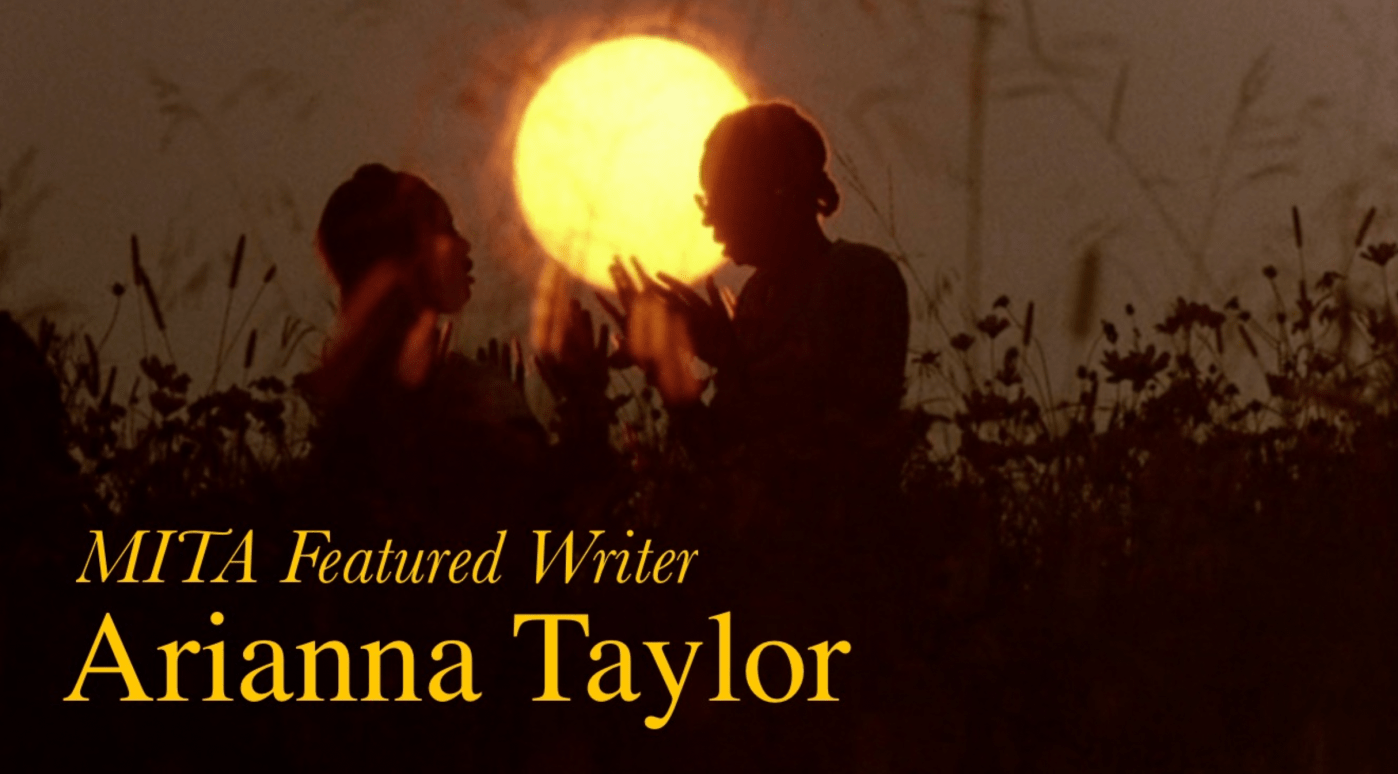
Arianna (Ari) Taylor, is a recent graduate from Stony Brook University with a B.A. in English. As a first generation college student, she is intent on breaking a long line of familial cycles surrounding addiction and mental health. Raised in Jamestown, NY and harboring her own set of diagnoses, Arianna primarily enjoys authoring creative nonfiction to better understand herself and her childhood—a type of unstable upbringing that many from her hometown are unfortunately familiar with.
In her spare time, Ari enjoys reading, playing the guitar, doing puzzles, and making her friends laugh. She is a big fan of epic poet John Milton along with her three cats—Laila, Marge, and Barnebus. With plans to pursue library science, her work is also published in Stony Brook University’s third edition of the Sandpiper Review.
 Madwomen in the Attic
Gorgeous work! Definitely one of the most powerful pieces I’ve read this year. Please keep it up, I am excited to follow your writing in the future.
LikeLike