
Blood for Water: Hands
I could begin with how I often lay in bed thinking about the blood running down my arms while looking out at the flowers from my window. I could trace my laying out to the fact that we don’t talk about Jerry. Jerry, who supposedly was cleaning his gun in the laundry room and the gun went off. I could talk about the ways the story changes over time from person to person.
My uncle tells me that his grandfather shot himself and then went crawling to Motha, with blood on his hands. I imagine her hands covered in his blood. I could talk about how we don’t talk about Jerry and there’s no pictures of Jerry but that his presence haunts our family. And that this laundry room where he bled is the same laundry room that I played in as a child. I could go back to that laundry room and think about me and my cousins playing together but I’d rather not. I could stay in that house and think about the other rooms in that house and the door that marked our growing sizes. I could find myself on the bricks outside of Motha’s house, hidden from my mother’s view, somewhere between the aloe and that purple flower. What was that flower? I could linger here. Or I could return to that moment inside Motha’s house where my grandmother gripped my mother’s hands to get her off me.
I could take into consideration that I recently read The Yellow Wallpaper by the author whose name I can’t remember right now and talk about how the narrator of that story knew everybody was being impacted by the yellow wallpaper and nobody would say anything; and I might relate that to us all being impacted by Jerry’s blood—in our blood, in the laundry, on the walls, on the floor.
I could, instead, take a pivot to my first psychiatric hospitalization because of my first known attempt at suicide and how it’s been nearly twenty years. But here I am, still thinking about how we don’t talk about Jerry, and I’m thinking about my great grandmother’s hands, how she put her hand on each of our backs, and as one of my Aunties describes it, imbued us all with her energy. And how those same hands cleaned up the blood of her beloved.
I could go back to a dream. And in that dream, I was in the laundry room and I saw my great grandmother’s hands covered in all that blood. And she called out to one of her twins to grab her a mop to clean up the blood. I could tell you that this twin felt words fall from my mouth, saying , “leave the blood, cover it with soil, and plant here.” I could tell you that in the dream we planted wild seeds in the soil-covered blood and from those seeds sprang a field of flowers and we all gathered and danced. I could relate this to the crucified body, the blood that ran and then drank in remembrance of… But this is dream– and I remember that after Jerry’s spilt blood, came the blood of his son, spilt in the seats of his sister’s car, and his son’s son blood running in a park, and this isn’t a dream.
I could begin with what isn’t a dream, but instead I’m falling toward the trail of my own blood over arms, over hands, over flowers, trying to get the blood for water back to the soil of the mother. This blood and the soil is the dream where I began.

At the time that I wrote “Blood for Water,” I had been working through desires to die as a desire to become one with the earth and to be amongst my ancestors. Growing up in a Baptist family, we regularly partook in communion, which included a fruit juice to symbolize the blood of Jesus. In this piece, I consider blood as a tide that rises and falls, as a purifier, a memory, and an event that repeats itself. My great-grandfather died from a self-inflicted gunshot wound. His descendants would occupy the space where his blood ran for at least 3 more generations. I am curious about this impact on my own longing for death.

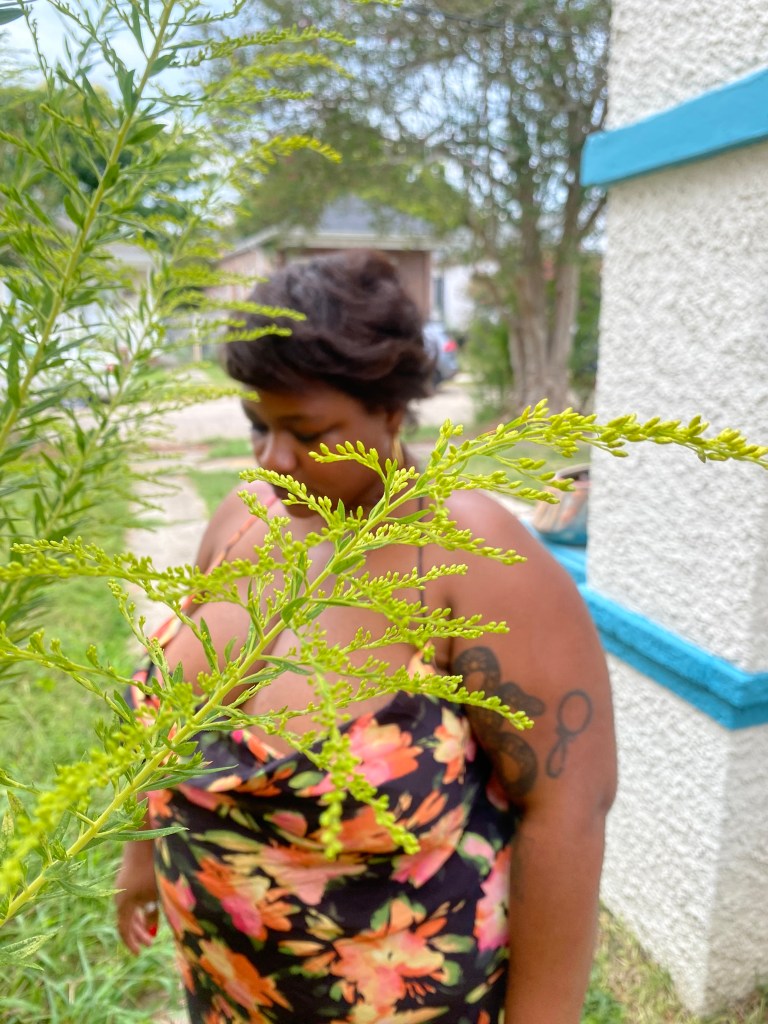
Tiara Raven Marie Clover is a death companion and literary worker, transfigured by nature, and engaging in practices that make form out of feeling. Clover understands death not as an antithesis to life but rather as an expression of a life lived. Clover sees the desire to die as not only symptomatic of colonialism, capitalism, and slavery (and their afterlives), but also a desire to be one with nature in her unbroken circle of living and dying.
 Madwomen in the Attic
Leave a comment