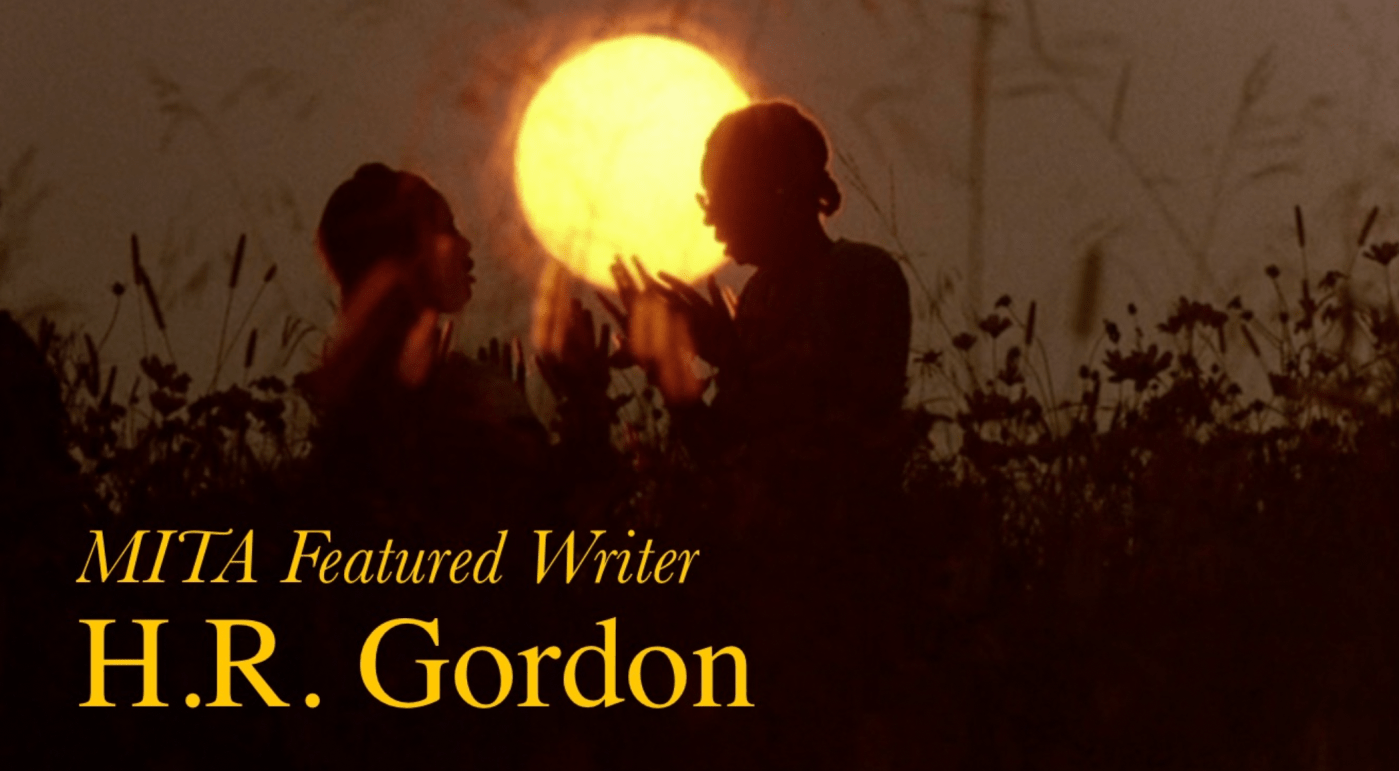
Excerpt from the work-in-progress manuscript The Hollow and the Light
I could imagine a million gardens and libraries—perfect places that held magic in the air. But the beast still loomed.
When I felt the ground shake from its rumbles and roars, I kicked the box I had stowed it away in. Engrossing myself in work and excuses, I only recognized my pain when my knees buckled and I braced myself against the kitchen floor, gasping for air.
I had been here before; I held a knife—a strong sharp blade that I favored for chopping rough vegetables. Only now I was trying to hold myself back from driving it between my rib cage. With heaving breaths and gasping sobs, I made the decision to cut myself open.
My chest began to sting, as if a thousand hornets were going to emerge from the open cavity. I inhaled sharply and dug deeper. When I could no longer take the agony, I clutched my abdomen, trying to contain the blood. A metallic sensation took over my nose and tongue. My body shook and tingled. But when I looked down at my hands, they weren’t bloodied. In fact, there was no blood at all.
But there was a hole in my chest, letting in a breeze I had never dared to feel. I almost felt a moment of peace—or maybe it was lightheadedness—and then my stomach gurgled, and I began to heave.
Gripping the crappy Formica countertops—I always hated how they stained so easily—I pulled myself to my feet, preparing to vomit into the moss-green kitchen sink. My stomach lurched, and my esophagus clenched, fighting to keep it all down. But I had already opened myself up, and so it came.
Thousands of moths fled my body.
Wretched and writhing, they flocked toward the light, consuming the kitchen as they had consumed me for so long. I spit the last of them into the sink, but my stomach lurched again. A hard mass crept up my throat. It was uneven and slightly jagged. I began jabbing at my stomach, urging whatever it was to exit before I suffocated. I leaned over the sink, beckoning it, but it took its time. I gagged.
The light flickered in the kitchen, struggling to shine through the blanket of moths. Just as I began to question my sanity, wonder why I wasn’t bleeding or sobbing—was I in shock?
Dissociating? Maybe I was already dead?—my gut gave one more heave and into the sink clinked an ornate key.
It knocked into a soapy bowl soaking from last night’s dinner and the weight of it pushed the bowl to the sink’s edge. Struggling to grasp it between its slippery coating and the tremors in my hands, my fingers grazed over a carving etched into the body of the key.
I turned on the water to rinse off the suds, and whatever else.
Vinat qui se vinat.
“What the fuck?” was all I could muster, swatting a moth away from my eye.
Excavation as Method: On Opening the Body of Memory, an autotheoretical essay
When I thought about cutting myself open, I wasn’t thinking about dying. I was thinking about release. I was sitting on my kitchen floor, the tile cold against my thighs, a knife balanced across my palms. The hum of the refrigerator was louder than my own breath. My body had become so full of ache it felt as though the pressure might split my chest open on its own. What I wanted—what I willed—was not death, though I did not know that at the time. I sought revelation. I wanted to see what pain looked like when it finally took form, when it was no longer trapped inside me with nowhere to go.
I remember tracing the knife’s edge with my thumb, the quiet recognition that something inside me needed to move, to escape, to become visible. Before the thought of cutting myself open, there was the quiet work of keeping everything in. I had become a master of containment—tight smiles, steady voice, the practiced rhythm of productivity. When I was busy, the ache dulled; when I stopped, it surged. I built my life like a sealed jar, believing that neatness was control, that silence meant safety. Inside, though, something growled—a heaviness that expanded with every year of endurance.
The beast is what I call the accumulation of what I’ve refused to name. It doesn’t roar all at once. It hums in the muscles of the back, in the clenched jaw, in the migraine that arrives without reason. Bessel van der Kolk says the body keeps the score, and I have come to understand that as literal: the body does not forget, it curates. It holds every flinch, every small betrayal of the nervous system, until the archive grows too heavy to carry. At some point, the body starts to leak. Not blood, not tears—something quieter. The way my breath shortened, the way my chest tightened when the world went still. I thought this was strength. I called it composure. But it was the beast pressing against the box, testing the hinge.
Judith Herman describes trauma as a state of oscillation between intrusion and constriction—between the memory that breaks through and the refusal that walls it off. I lived mostly in constriction, in the pause before breaking. Containment felt like survival because it kept the world tidy, but survival and healing are not the same thing. Theorist Karen Barad might say that the self and the wound are intra-acting, constantly shaping one another. The beast was not something inside me; it was me—the part of myself I’d cordoned off to keep moving. The longer I contained it, the less distinction there was between the cage and the creature.
Containment is not quiet; it vibrates. It builds a low frequency beneath every conversation, every moment of stillness. You can live like that for years, mistaking the hum for the sound of living.
But over and over again the walls thin, and the hum begins to sound like a call.
It happened more than once. There were nights when I sat sobbing on the kitchen tile, the knife steady beside me, as if its presence alone could offer relief. Other nights I wandered the room barefoot, dizzy from the thought of falling—half hoping gravity might do what I could not. It wasn’t a single breaking point; it was a cycle, a choreography I knew by muscle memory.
Each repetition blurred the edges between danger and ritual. I told myself I was only thinking.
But thinking, then, was a kind of doing.
And it was always the kitchen. Maybe it was practicality. Tile floors are easy to clean. I thought about that—how if it happened, it would be easier for someone else. Less mess, less burden. I told myself I was being considerate, but now I think it was also a kind of punishment.
The tile was cold, unforgiving. The room never let me forget my body, its heaviness, its refusal to disappear. Sitting there, the discomfort felt earned—like I was meant to feel every sharp edge of the space, to pay penance for pain I couldn’t name.
It happened in different kitchens, across years of my life: in my parents’ house when I was home from college and they were on vacation, in my graduate apartment with its tile floors, in my current home when I first moved in and began unpacking what had happened to me as a child. The space didn’t matter; the posture was the same. Limp on the cold floor, breath shallow, the air heavy with appliance hum. I didn’t want to die; I wanted the noise to stop. I wanted to see what the ache looked like if it could be held in light.
There was a strange kind of logic to it. The knife was never dramatic—it was ordinary, utilitarian, like the thought itself. Not about annihilation but verification. Pain is doubly cruel when it has no proof. I wanted to make it visible, to translate the invisible hum inside me into something clean, sharp, tangible. When I think about those nights now, I see them through Barad’s idea of the agential cut—the cut that doesn’t simply divide but exposes relation. To imagine that knife was to confront the entanglement of harm and endurance, of body and history. It was a way of mapping where memory lived in flesh.I don’t think I ever wanted to end the story. I wanted to reach the part where it changed. But pain has no punctuation; it just keeps accumulating until you carve a pause. There wasn’t one defining release. It was slower than that—more seep than shatter. Some nights I cried until I trembled, until breath became its own kind of movement. Other nights, nothing came at all. Just the tightness in my chest, the hum of the refrigerator, the ache that refused to leave. It took years before I realized my body had been opening the entire time, just not in the way I imagined. When the body opens, it’s rarely clean. It’s shaking hands and uneven breath, a sudden wave of nausea that feels like grief finding the exit. Sometimes it’s laughter that comes too loud, tears that arrive with no story attached. Matter doesn’t distinguish between the sacred and the mundane—it just moves. The body releases what it can, when it can.
What I mistook for stillness was the slow work of metabolism. Trauma doesn’t vanish; it rearranges. Sara Ahmed writes that emotions are “sticky,” attaching to bodies and objects, transferring through touch and time. I think of the kitchens I’ve sat in—how each one absorbed a layer of that stickiness, how the floors and cabinet handles hold a record of my trembling. The body and the room conspired in their remembering. The kitchen became an external organ, a place where my insides leaked quietly into matter.
This is what feminist new materialism teaches me: that pain is not metaphor but movement. The body isn’t a container; it’s an ecology. Each cell participates in meaning-making.
Each shiver, each gasp, is a sentence written in a language older than thought. When I cried into my hands, when I pressed my forehead to the cold tile, I was composing in that language—translating memory into air, salt, and vibration. Understanding alone does not heal; it only rearranges the pieces so you can see them. What follows is quieter, slower—the long practice of living beside what you now know. I used to think healing meant closure, that one day the ache would vanish and the past would fold itself neatly away. But the body doesn’t forget, and theory has taught me not to demand that it does. Ann Cvetkovich writes that theory can be a kind of emotional practice, a public form of feeling. I think of that often—how reading, writing, and naming what hurts can become a way of tending to it. Theory, for me, is a hand pressed gently against the wound, not to stop the bleeding, but to say: I see you. I’m here.
When I first began writing through trauma, I wanted answers. I wanted to extract meaning like a surgeon removing a foreign object. But what I’ve learned is that theory is not surgery—it’s stitching. It holds the body open just enough for air to circulate, for light to touch what has been hidden, for language to move through. It does not close the wound; it prevents infection. It keeps the space alive. And trauma is not a foreign object. It is not a discrete entity or event that happens in the past and spectrally returns like Casper the not-so-friendly ghost. It is not a beast boxed up in the storage unit of a psyche. It is entangled, relational and intrinsically intra-connected—woven into the tissues of daily life, into gestures, sounds, silences, and smells. It moves through time the way breath does: always both entering and leaving, shaping and being shaped.
Feminist theory reminds me that the self is never solitary. My survival is not just my own—it’s entangled in other bodies, in other stories, in histories of endurance that made this moment possible. Theorizing is not distancing. It’s proximity with purpose. It’s what allows me to look directly at the wound without disappearing into it. To write through pain is to stay alive inside it long enough to notice its edges soften, its temperature change.
If the nights on the kitchen floor were acts of endurance, then theory is the act of tending—of checking in, of keeping breath moving through the body, of refusing to seal what still needs air. I return to the idea that the body heals itself, but only when given space to stay open.
Aftercare is the work of returning—again and again—to that space of openness without collapsing into it. It is not the absence of pain, but the presence of gentleness. Theory is how I practice that gentleness: slowly, carefully, by naming the unbearable and then sitting beside it, unafraid to keep it company.

Excavation as Method: On Opening the Body of Memory and The Hollow and the Light both arise from the same impulse: to dig through what has been buried—not to exhume trauma as pathology, but to understand it as sediment, as matter that continues to move. My work sits at the intersection of trauma theory, feminist new materialism, and autotheory, but more than that, it’s a practice of listening to the body as archive. I write not to “heal” in the conventional sense, but to stay with the residue—to trace how memory lives in muscle, scar, and syntax.
Writing becomes a kind of excavation: a slow, deliberate unearthing of what language can almost touch but never fully hold.
In these pieces, the mind is not separate from the body, and the self is not a stable site of knowing. Instead, I try to hold the fragments together just long enough for them to shimmer—to show that what we call madness or instability might also be a form of deep attunement. If mental health discourse often demands legibility and progress, my writing resists that demand. It lingers in the hollow spaces, the gaps where memory, matter, and meaning slip through one another.

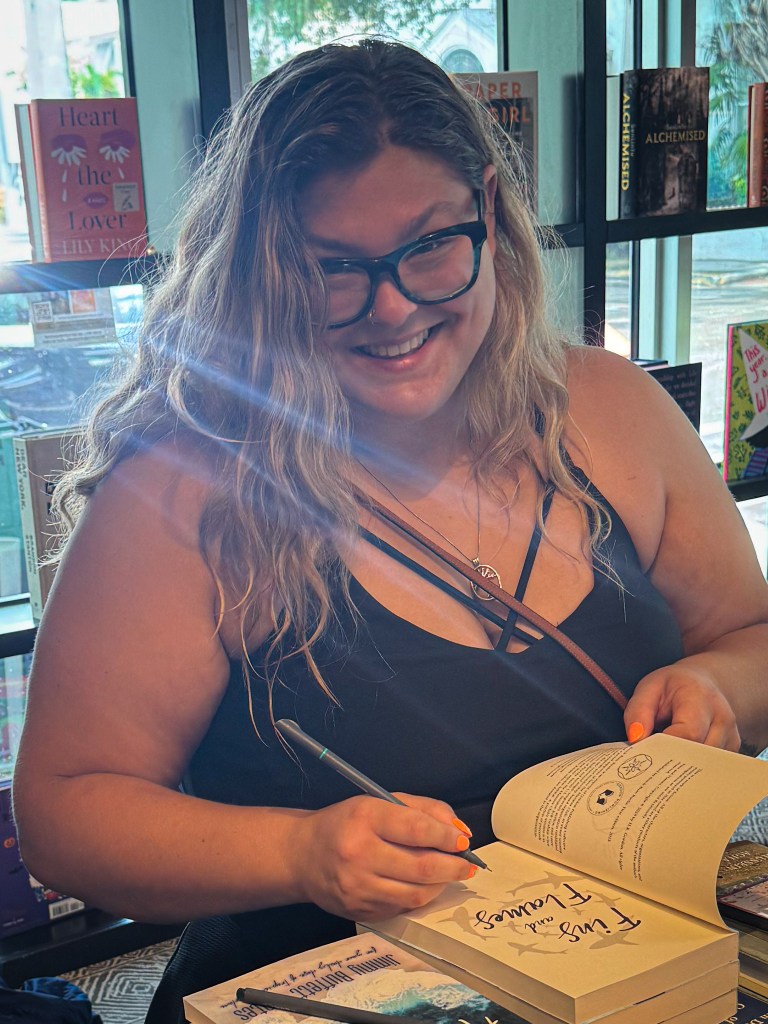
H.R. Gordon (she/they) is a writer, scholar, and publisher whose work moves between the personal and the theoretical, exploring trauma, embodiment, and care through feminist and materialist lenses. She is a Ph.D. student in Global Gender and Sexuality Studies at the University at Buffalo and the founder of Gordon Publishing Collective, which includes imprints for literary fiction, genre fiction, middle grade books, and more. She lives in Buffalo, New York, with her partner and three dogs and invites connection @HR_Gordon. You learn more about Hannah on their website, HannahRGordon.com.
 Madwomen in the Attic
Leave a comment