
Temporary Safety
“Look at me,” you say, holding out your hands. We are separated by a desk with a high ledge that you put your elbows on before the person in front of you can move her purse. Your hands are swollen and a darker shade from exposure, darkest under the nails. “I need to shower, but they wouldn’t let me yesterday. Look.”
I am a volunteer in an abandoned rec center that the city has chosen as the site for an emergency weekend shelter for women and transfolx. Treadmills, stationary bikes, and elliptical machines are locked into rooms with the lights off. Your hair is short, even with your chin, and you wear layers of orange, yellow, red. You are taller than anyone else in line and dirtier than I have ever been.
A staff member sits to my right, each of us in front of a different line. I have been trained that if people need showers, clothes, bus tickets, counseling, food to take home, hotel vouchers, transitional housing, a doctor’s appointment, childcare, to make a phone call, notebooks, help with computers, printing, paperwork, picking up their mail, help getting a new ID, or somebody, anybody to talk to, I should tell them to go to the regular day shelter at nine am on Monday.
“You’ll have to ask about that at the regular shelter on Monday morning,” I say. “Can I please have your name to check you in?”
The staff members says “Good morning!” to the next person in her line.
There are 100 people here and only two staff members, two security guards, and as many volunteers as they can get. People using the shelter are spread out across what used to be a basketball court. Heavy, screeching folding chairs surround half a dozen plastic tables, which are not enough. People sleep on top of bags, color in books someone donated, and fan around a tv set that plays whatever movie a staff member grabbed.
You tell me your name and then you say, “There are showers right there.” You look me in the eye. “I can see them.”
We have laptops set up beneath the ledge of the counter, and the system works to find you in the city-wide registration software. It shows a circle trying hard to complete.
“I’m sorry, they—”
“Do you know what it’s like?” you say. “Do you know what it’s like,” you almost yell, “to have someone say your pussy is dirty in front of other people?”
Later, when I have time to remember this moment in a quiet room with no one observing, I imagine how this happened to you. I imagine you feeling safe and warm in the arms of some dumb guy, maybe on the bank of a river or in a park, maybe in front of a campsite where other people are going about their evening. I imagine the dumb guy pulling up his hand from your body to catch the eyes of another dumb-guy and saying those words you will never forget and which dozens of women and one male security guard just heard you yell. I imagine both men laughing with you frozen in his arms, and I have my own memories that don’t tell me what this is like but are a beginning to understanding: the time in middle school on a backpacking trip when I heard a kid tell his friends that he’d seen me peeing in the woods; the time I overheard a group of men that I worked with compare the bodies of the women that we worked with and their access to those bodies. I was around the corner and had to freeze until someone opened the door to come in, and I could escape with the ding of a bell.
Your arms are in the air, waiting for me to say what you need to hear. The line is long behind you, and the staff member watches me, waiting for me to say what she needs to hear.
“You can come inside to use the shelter but nobody is allowed to use the showers.”
You drop your arms then pull one of them back up to point directly at me and shout “This is fucked up!”
The room hears you. People stop talking and stare. For two beats we can hear the movie playing in the gym: Thelma and Louise.
Finally, your profile appears on my screen. It shows that you and I share a birth year. We both grew up with pogs and TLC and snap bracelets and this makes me a possibility of you and you a possibility of me.
You push your way back outside against the current of the lines. Now I can see you wear tights with holes in them and heavy, tough-looking boots.
“You okay?” the staff member says to me. I say “Sure,” which is what people say when the answer is not yes or no, and no one asks you the same question.
You approach the coffee table with your oversized winter jacket open like a dare. The next layer down you wear a sweater printed with cheery polka-dots. Billboards and radio commercials are rhyming about April showers and it is Easter Sunday. There is a cold snap and the heat blares but it looks like only part of you can feel it. All weekend, you’ve kept your jacket on.
Today, there are enough volunteers for me to be stationed at the coffee table all day. I am supposed to keep the towers of Styrofoam cups, the bag of thin paper sugar packets, and the canister of clumping powdered cream behind the table. I measure out my day in coffee urns, and when it empties I push the urn on wheels into what used to be a staff kitchen for people who worked at a rec center and must have been very fit. On the walls in the kitchen are faded posters about the food pyramid and stretches a person can do every 30 minutes while sitting at a desk.
For the fourth time today, you point at the urn of coffee without saying anything. Your hair is in messy strands and your cheeks are flushed. You do not have your Styrofoam cup that you are supposed to save. Handwritten signs posted around the coffee table say “only one cup each day” and I have to explain and overexplain that the sign means cup, the Styrofoam container, not cup, the volume of coffee inside. The word “cup” becomes ridiculous, unhelpful, a word invented by people who don’t have to use it.
“Try to save the cup this time?” I say, handing you a cups-worth of coffee in a fourth Styrofoam cup.
“Can I have more sugar?” you say.
You and I have a history of exchange. Yesterday, my job was to stand in front of crates of snacks leftover from breakfast: granola bars, baggies of hard-boiled eggs, pudding cups, cans of juice. You asked for grape juice, and when I told you all we had was apple, you pounded your fist on the table, and I jumped. I am still embarrassed about it. It is as if I failed your test: how comfortable can a volunteer be here, really? A staff member saw and asked me, Are you okay? and nobody asked you the same question.
“Only two,” I say, “we’re running out.” I pretend to forget that I have already given you sugar when I gave you the cup. When I push two more paper packets across the table, it feels like a bribe.
A few hours later, a woman and her husband arrive with five loaves of homemade chocolate-carrot-banana cake.
“Please tell everyone Happy Easter,” the woman says, trying not to peek into the basketball court, which is loud with some dumb action movie.
“The ladies will love this!” the staff member says. The woman and her husband look happy to be thanked, which is part of what they came for.
We cut the cake into tiny, two-bite sizes. It is still warm and the melted chocolate sticks to the plastic knife. We carpet a folding table with napkins, each holding a chocolate-carrot-banana cake stump.
You are first to arrive after the staff member makes the announcement for cake. I envision you grabbing five pieces at once or cussing at me or sweeping the table’s landscape to the ground when I tell you only one: but you say “Thank you.” You say thank you as if I had made the cake, and I try, a little bit, to say that I’m just handing it out, but you say “It’s delicious” and we believe together that I am the kind of person who could make something so sweet.
It is a season of sickness, and we are only safe together if we don’t let anyone enter before putting a gun to their temple. Science says that the temperature gun will not work on the wrist. City leaders say that in order to sit on a heavy folding chair or on the floor of an old basketball court, eat packaged food from a brown paper bag, and drink a cup of room temperature coffee in a Styrofoam cup that you will be asked to reuse, you have to let someone hold a plastic gun to your head.
I have this job on one of the first hot days of summer. I am stationed in the atrium between the heat of outside and the struggling AC of inside. I sit in a folding chair between two sets of double doors with two broken automatic-open buttons.
People come in with sweat on their foreheads. When I show them that their temperature has three digits in it, they say, exasperated, “‘Cuz I walked here,” widening their eyes at the obviousness. “It’s hotout.”
Some people show numbers low enough to be dead.
In both cases, I am supposed to try again in ten minutes.
When you come in, it is mid-morning and there is no one else in the entry atrium. Last week, you and I talked by the coffee station about a software program that you are building and your idea for a charity that will send packages of multi-modal learning material to children living in poverty in the country where you were born. I tell you my name again and ask again for yours, and you tell me something different than the name you gave me last week. But you carry the same large book bag with a padlock holding closed the zippers, and you wear the same long gym shorts and socks with Adidas sandals. You tell me that you’re making progress, but I won’t say more because you don’t like to share details without copyrighting them. You have had many things stolen from you before.
I have chatted with you long enough, and now it is time for me to do my job. We face each other and you close your eyes when I raise the gun. We hold our breath and wait to see if you are safe when I pull the trigger.
You call me the name of a staff member, which is what you always call me. I am walking you outside and I hold the second broken atrium door open. A group of women with smoke still in their mouths don’t see you yet, and they come in before you can come out. When they say a smoky thank you, they call me “hon”, which is what most people here call most people.
You use the hand rail to step down the ramp. You and I are waiting for someone from the medical clinic, who weekend temporary emergency shelter staff are supposed to call before an ambulance. Staff has told you and me that someone from the clinic should arrive any minute. You said “I’ve heard that one before,” and the staff member shrugged.
You are thin enough for yoga pants to hang from your hips. You have deep wrinkles and skin turned the same fading brown as your hair. You always wear pink tank-tops and a softer-pink fanny pack, reminding me of a t-shirt my grandmother wore in her nineties that was large and purple and said when I am old I will wear purple
You say the staff member’s name again when you say you are happy to see me, by which you mean her. In your eyes, I am a person who you see twice as much as you do, and sometimes you pick up conversations you must have had earlier with the woman you think I am. I see what you mean about my mood after eating sugar, you’ve said to me when you thought it was her; or, He wouldn’t even answer when I called!
I’ve never met the staff person you think I am; she works at the day shelter during the week. I don’t know if I would see in her what you see in me. In large group photos from decades ago, I locate myself only through a feeling.
Today, we sit on a bench in the shade, and you tell me that you were at the clinic yesterday, and they called you an ambulance. “They took me to the hospital, but they couldn’t do anything,” you say. ”I didn’t have a ride back, so I walked.”
The hospital is miles away and yesterday was in the 90s.
“How long did it take?”
“I don’t know, hon.”
I could pull out my phone and see how long an algorithm predicts it would take to walk that far. I could see if advanced options let me set the temperature of the day to high heat and the pace of the walker to someone who needs a support bar to take the ramp out of an old rec center. Any machine would compute your story impossible. No routes available.
Maybe it is impossible. Maybe this is what you think happened because something like this happened to you years ago or months ago or last time you went to a clinic.
Or maybe impossible is the mother of possible. Maybe last summer is not so different from this summer, and maybe it’s not that you confuse distance and time, but can locate where they meet only through a feeling.
Another group of smokers sits in the shade of a tree. They pass something in a bag, and when they see me, a woman puts it behind her back. Everyone here is careful about who sees what.
“One second,” I say. “I’ll be right back.” I will bring you a giant cup of ice, even though shelter guests are not supposed to get ice between meals.
“I’ll be here,” you say, “thank you” and then you say the staff member’s name, and I somehow feel more myself when I am confused into closeness.
V.
It is full summer now and the AC system in the old gym collapses. There are bricks from somewhere holding open the broken atrium doors and chairs holding open emergency exits that don’t alarm. Anyone who didn’t get here early enough to circle the large fan on the far end of the gym fans themselves with what they’ve got: mostly they use the pamphlets for a church three blocks away. You wear a neon green windbreaker zipped over a nightgown and you hover near the open emergency exit that looks at an empty parking lot. The exit is at the end of a row of lockers, and I come over often from the coffee station to remind you with the words I have heard staff use: “Ma’am, you are free to leave at any time, but you can’t leave through this door.” You pace the hallway of lockers in short, quick steps, and it looks like at any moment you could run.
When you don’t seem to hear me, the security guard comes over, too.
“I’m going home,” you say, and the guard and I catch eyes over your head. You have been doing this all morning, and staff are trying to figure out your story: where do you stay and since when. You slip out of answering questions the way you float toward emergency exits, a bright green and white blinking in our peripheries.
The guard tells you what everyone has already told you: “You are free to leave at any time, but you have to do it through the other door.” The guard has a son with a respiratory disease and she is always a little bit holding her own breath for her son’s easy breathing. Maybe this is why you seem to trust her more than anyone else.
You look at the guard, your forehead wrinkled, and then back out the open door. After the parking lot is a city and after the city is every place in the world that is not here. I wonder what would happen if we let you go. Would you follow the gray path of shade from the building over the sidewalk around the corner and come back in the front door? Would you take one step out then hop back in? Maybe you would stop in the middle of the empty parking lot and let your bright green windbreaker fall to your feet. Maybe you would raise your bare arms and let the rising heat from the pavement and the falling heat from the sun meet in the very middle of you.
“I want to go home,” you say, and the guard and I follow you slowly back through the hallway of lockers. The three of us barely fit and we walk slowly, all of us playing along that safety means not having a choice of doors to escape from.

A Note from the Author:
“Temporary Safety” is creative nonfiction based on my early days of volunteering at a day shelter for women and transfolx in Denver, Colorado. In each of the five sections, the narrator speaks to a different person using the shelter. Addressing each person as “you” felt like one way to honor the agency of the people I’m remembering, and yet it also risks mushing each person into an indistinguishable Other. I think a lot about the fine line between privacy and erasure in shelter spaces. As a staff member or volunteer at a shelter, you know a guest’s name from the registration system, which also shows a log of notes written by other staff; shelter guests do not have the same access to information about volunteers or staff. As an outsider to this community, then—a volunteer without lived experience of using a shelter—how can I value shelter guests as individuals while at the same time respecting their right to privacy? As writers in any space, how do we honor the people with whom our exchanges shape our worldview, even if we might never meet those people again?
There is a large overlap between people experiencing homelessness and people without resources to care for their mental health. In these five scenes, I explore this overlap as a space where the environment itself can be maddening—long lines to access resources that are often inadequate, sometimes absurd and biased rules, crappy and repetitive food, and on and on—at the same time that people in this environment create a culture of care. It is not necessarily that shelter guests and staff have advanced knowledge about mental health and how to support individuals in crisis, though sometimes they do; rather, this shelter creates a culture in which guests and staff know how to be with others during psychological, emotional, and mental distress: how to not turn away, run away, or say “go away”. While most shelters operate with a shoestring budget and an endless need for resources, these spaces can, and sometimes do, care for members of our society when no other spaces will.

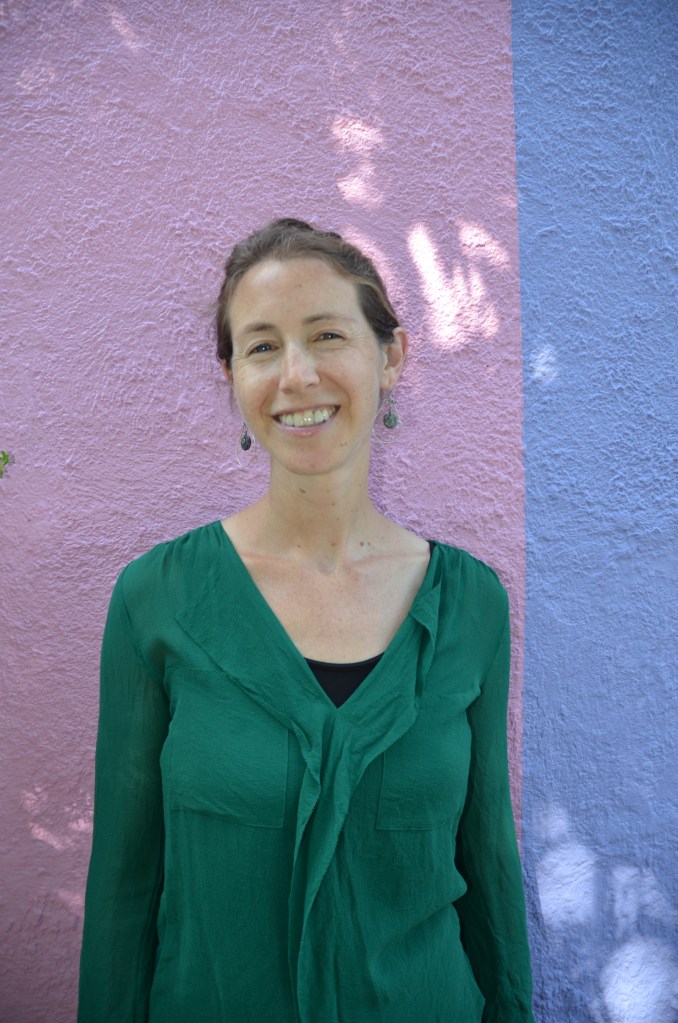
Alison Turner is often uncertain and currently believes that uncertainty is a practice for being in the world as a listener. She facilitates writing groups and consults with writers in shelter and prisons, serves as a Reader/Advisor/Editor (RAE) with a community writing project called The Geopolitical Open Atlas of the Polity of Literature (The GOAT PoL), and is an ACLS Leading Edge Postdoctoral Fellow working on an oral history project in Jackson, Mississippi. She is the author of Defensible Spaces, a collection of short stories.
 Madwomen in the Attic
Leave a comment