Underwater
Your partner, Megan, greeted me at the airport with a warm hug. We communicated by phone the three weeks you were missing. When we saw each other, there was an instant knowing, a recognition of deep grief that we both carried.
At the airport, Megan and I got in your silver Honda Civic in silence. I could still smell you in the car. I remembered when I’d visited you for the last time.. It had just been you and me, driving around to our favorite spots. The ocean. Powells. The Hawthorne District. Cuban food. Your first experience being queer in a gay bar. We went early in the day and I told you it would be a bunch of older dykes in flannel,day drinking, looking like lumberjacks. I had been right. We laughed and laughed. I miss laughing with you.
After that trip I reflected on the fact that my connection with you sometimes showed me who I could be with others and what I missed so much with other people. You and I could communicate things with a glance. We could talk for hours and it would seem like no time had gone by since we’d seen each other. We could love each other even when we disagreed. We just KNEW each other deep down and could laugh at each other’s faults.
In the cold basement in the police headquarters, your mom, dad, Megan, and I gathered around a conference table. We heard the words ‘no foul play- accidental drowning’. Your father, first to speak, said ‘drowning is an ‘honorable death’ and I looked at him, dumbfounded. What is a dishonorable death? If we had some proof you’d died by suicide in that frigid pond on a dark night in Laurelhurst Park, would he think that dishonorable? Megan and I glanced at each other and rolled our eyes, both thinking about how utterly incomprehensible and sad this all was.
While you were missing, your cell phone and jacket were found placed under a Western red cedar by the side of the pond. The same kind of tree we sat under in college, talking, laughing. The kind of tree that we communed with while tripping at our hippie college, the kind of tree that offered shelter then. Did it offer shelter for the moments or hours before you walked into the water? Your belongings were placed neatly there. An unopened pack of cigarettes, your cell phone and jacket. It seemed like you had just stepped out a moment and would return.
I wonder what you thought of that night and if you thought of me. Did you think of me as a sanctuary? Somewhere you could go to escape? You were so terrified that your first girlfriend was stalking you, that she had taken over your computer. I guess it was even worse than you told me, but your partner only hinted at this, never opening up and sharing what happened in those last days. When she finally told me about the fact that you were so scared that you wouldn’t speak at all, that you were just communicating in notes, she then ghosted me. Never spoke to me again. The loss of someone to share that grief with was another blow to my already shattered psyche.
Did you feel completely alone that night? I was always here.
I wish I could’ve at least connected with you across the miles. The weeks you were missing, I wandered around in a cloud of longing. I wanted to hear your voice, see your face and know you were alive. I could barely care for my kids. I could barely talk. I had to work, but each day at work felt endless, not knowing if you were out there, lost and trying to find safety or if you were already dead
I kept hoping. I drove by the bus stop once a day, hoping that you’d made the 1000 mile journey to my house.
Did you know you would die or were you just trying to get to that small island in the middle of the pond to escape the terrors that had beset your mind? You were a strong swimmer but must’ve been no match for the beasts that pulled you under. Were you in that pond trying to save your life or trying to end it?
The day they found you was an unusually warm February day. My daughters and I were watching the Academy Awards. Inside I was full of despair, knowing that they probably wouldn’t find you alive. The phone rang and I answered. Megan’s voice said, “they found her body” and we both started keening loudly.
My world/my bodymind shattered. I muddled through the next hours: the hours of traveling to get to your partner and the falling down wailing on the floor of the Denver airport..
Part of me that knew and grew with you from 18 to 37 died. And much of me remained underwater, stuck with you forever, rarely able to swim above the water and find any sunlight
I will never know the story of how you died. The bits and pieces that led you to die in a shallow pond in a park in the middle of a city. All I do know is that I love you forever. That I’ve never known another friend like you and that my life has had a deep hole of loneliness ever since I lost you.
Pulse of Life
Cold winter walk by the river,
immersed in sound,
singing ice,
keening rock pigeons.
As I walk,
I feel my heart beating,
acknowledge being alive on
another day I want to die.
My body
zaps with electric shocks of pain,
sizzling my brain,
morphing it into
a flatline of pernicious despair.
I come home
and sink once again
into the couch.
This backhanded curse of
a body,
that once found
bliss in the touch of others,
strength in birthing two children,
in swimming, lap after lap,
has betrayed me.
I long for a kinder life.
I go back to the river.
See the American Dipper,
dip and swim underwater in bitter temps.
Hear the calls of the Canada Geese,
gathering in a small patch of water.
Feel the cold air and breathe in.
Surrounded by the pulse of life,
I’m still here.

The Magic of Peer Support
I was born into this world crying for months and months during a frigid Wyoming winter. I was sent to a psychologist at 8 when my parents didn’t know how to handle my big feelings, my fears, and my insomnia. I felt alone in a small town where I felt alien, ashamed, and alone. I found some connection and a sense of belonging in swimming. When I was a teenager, my swim coach was arrested for statutory rape and that swimming world was no longer a place of belonging. It became a source of trauma, confusion, and disconnect.
I tried to suppress all these hard feelings through starvation. Numbness from all those feelings is what I sought and for a time, it worked. When my parents finally realized I was dying, I was locked in a hospital that created more despair and amplified the shame about who I was. It made me feel aberrant, almost criminal for my pain and how I coped with it. It did nothing to help me cope with my recent loss and trauma. It did nothing to help me accept my queerness in culture that shamed queer identities (when it was even talked about). It did nothing to help me understand my neurodivergence in a world that overwhelmed me.
I headed to college with great hope. Within a month, I was raped. During this horrible time, I found my soul friend, Heidi, who held space for me and helped me survive this horrific trauma and helped me find my anger towards him and towards the roommates that shamed me, rather than the person who raped me.
I soon fell in love with a man who lived with paranoid and psychotic states in addition to being abusive and manipulative. When I became pregnant, he abused me throughout my pregnancy. She was born and she saved me. She gave me a reason to keep living. We have both never fully recovered from this traumatic abuse both before and after her birth. I had a second daughter with him 6 years later, and I knew I couldn’t continue to subject them to this ongoing trauma. I escaped with the help of peer support from a support group at a domestic violence agency, my friends and my family.
Although we were physically separate from him, he still abused us from afar. All of us were deeply affected by this experience and each of our nervous systems were forever changed by it. I fought hard to get help for us to cope with our extreme pain, but hit roadblocks everywhere I turned, and when I lost my soul friend and my dad, things got even harder in our family due to my intense grief. My youngest survived this, in part, by finding a creative outlet with dance and an artistic community outside of our family. My oldest survived through music, books, writing, and connections with people. The system failed all three of us. It is not accessible for our neurodivergent brains and burned-out nervous systems, and we still struggle to cope with this overwhelming world.
In the past several years, my grief over my physical disabilities, chronic pain and isolation triggered a descent into worsening daily suicidal thoughts, self-harm and anguish. Because I was desperate, I tried medication and was unable to find relief. Medications caused horrific side effects for me both mentally and physically. I could not find a therapist that worked for me. One therapist cut me off, saying I was ‘too depressed’ for therapy. Another did not seem to understand the anguish I felt from my inability to participate in the outside world or my great despair over political issues. My despair was in large part due to the world causing me great distress with its lack of safety net and terrifying political atmosphere. I also found no understanding of how difficult it is to be unable to work in a society that values productivity above everything.
As I aged and hit brick walls with the traditional system, I had to find new ways to cope with my ongoing intense distress. When I attended in person and online peer support trainings and Alternatives to Suicide groups, I connected with others with lived experience and found safe places to talk about things like self-harm and suicidal thinking without fear of psychiatric incarceration. In a world where I felt I had to hide these things, finding these safe places has been truly life affirming. The so-called ‘little’ things like dogs, music, poetry, being outdoors, books, and social media also help keep me alive. I still struggle every day with suicidal thinking and sometimes with self-harm, but I’m learning to accept that space inside myself and know that nothing is permanent. Finding acceptance of my neurodivergence and knowing that I am not alone; that I’m connected to the disabled and Mad movements, both past and present moves me forward day by day.
I have survived all of it by connecting with other people who have been there. It wasn’t until I found a community of psychiatric survivors that I began to understand that hospitalization is extremely traumatic to MANY people. I began to feel less ashamed and more empowered. My best friend helped me stay alive after rape and gaslighting from my roommates. When I found a community of peers at a domestic violence agency, I was finally able to leave my abuser. And recently, I was only able to feel some light in my darkness by finding a community of people with lived experience both on-line and in my local community. Peer to peer connections helped me connect to my anger, my voice, and to feel less alone in a world that wants us to bury our madness, our otherness, our grief and our trauma.
My personal and professional experiences have shown me that mental health providers often neglect to help people find their sparks and things that give life meaning. They focus on pathology and compliance and often make us feel like we will be sick forever. Working to transform our system through co-founding a mostly peer led agency, co facilitating peer support groups and disability activism has helped give my life meaning. In my experience, peer support is one of the only things that has kept me here. In community with others who show me who I am, who love me for who I am, I find some healing. I wish that more workplaces and other places outside of peer support groups were places of refuge where people could unmask and share their messy selves, their thoughts of wanting to die, the things that give them sparks of joy. We need a world where we can hold each other through it all instead of forcing us to endure this hard world in silence and isolation.
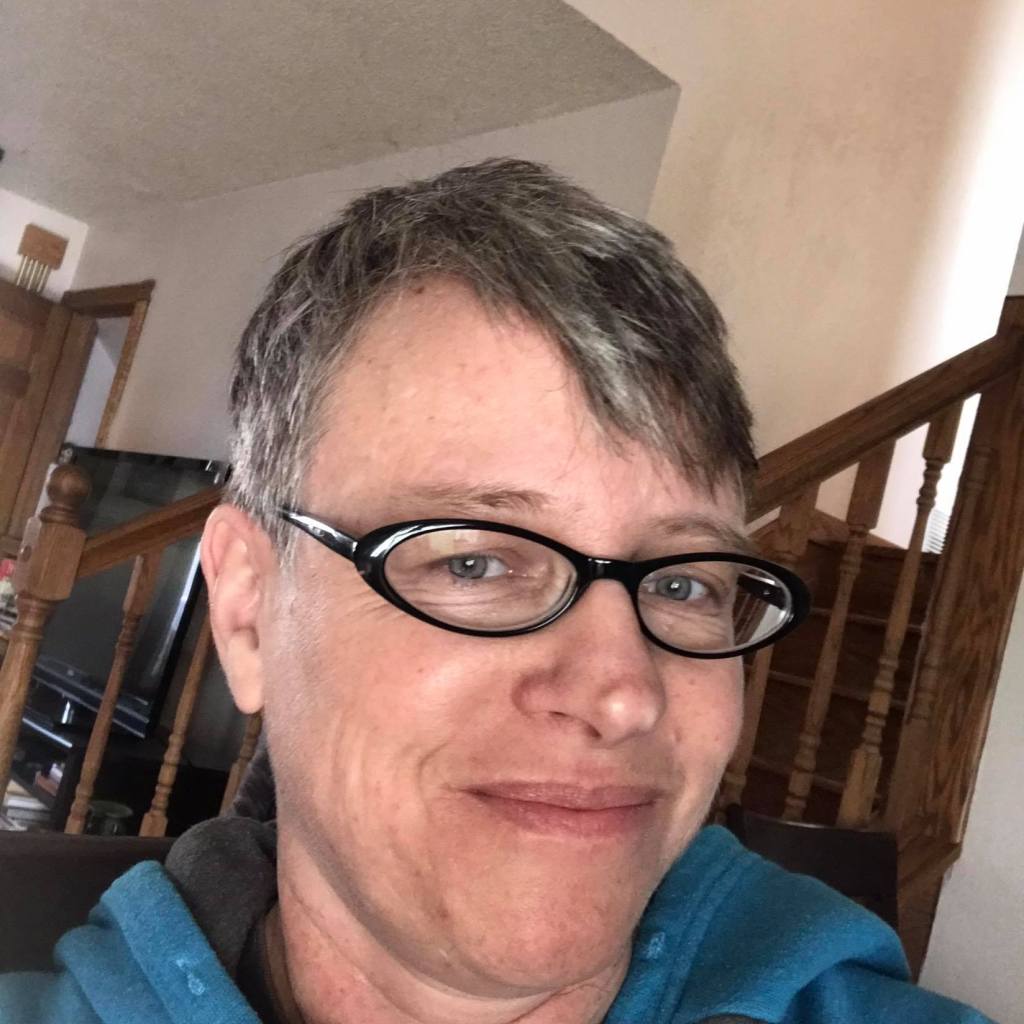
Alison Dawson is a neurodivergent, multiply disabled queer person who has experienced extreme states and emotional distress since childhood. Since a traumatic psychiatric incarceration in 1987, one of their lifelong goals has been fighting for a more accessible humane world for folks with extreme states, mental health struggles, disabilities, neurodivergence, and other marginalized identities. They have worked for over 2 decades as an individual advocate and a systemic activist for folks who our system has left behind such as those who are: disabled, neurodivergent, unhoused, low-income, LGBTQ+, and more. Losing their best friend to a mental health crisis in 2008, changed their lives forever and also, opened their eyes to the need for more places to speak our grief, to have rituals, and to never place a timeline on grief. As their physical disabilities have worsened throughout the years, they have become a fierce advocate for change in the way our medical system treats folks with chronic pain/illness, particularly those with marginalized identities. They recently co founded a mostly peer led organization, a disability peer support group, and co facilitate Alternatives to Suicide groups. Throughout their life, writing has been a way to express their feelings about the world around them. The Memoirs to Re-imagine Mental Health care group has helped them grow their writing while also connecting with others with diverse experiences of the world. This and other writing and support spaces have helped them survive these last 5 years where they have lost a lot of function and virtual groups have become a literal lifeline.
 Madwomen in the Attic
Leave a comment