
Love among Survivors: Bastille Day 2014 (July 13-16)
Day two, Tuesday, begins overcast and noisy. The racket from the various kinds of traffic on Holland Avenue is getting in my skull and rattling around with the voices that have recently rejoined me from the ward, the clinic and the root cellar. I stayed up all night with activists Kathy, Lauren and George, holding the vigil for those who have been killed, incarcerated, incapacitated and silenced by psychiatry. I walk up the street to the hotel where the other vigil participants are staying, and slide into my psychiatric patient mind. The voices are too loud. The traffic is too close. God, I need some pills. Can I get off the street before someone notices that I need to be locked up?
I am safely sedated inside my room for a short rest before I realize that today is July 15. Four years ago today, I lost my beautiful friend Eimer to a drug overdose. A drug overdose that quite likely included a variety of psychiatric drugs for her alleged “personality issues” and “oppositional behavior”. I cry alone in the room and hope I have honored her in some way. I am desperately sad that the loss of her to this world is so big, and my ability to memorialize her and others who have ended in her way is so small.
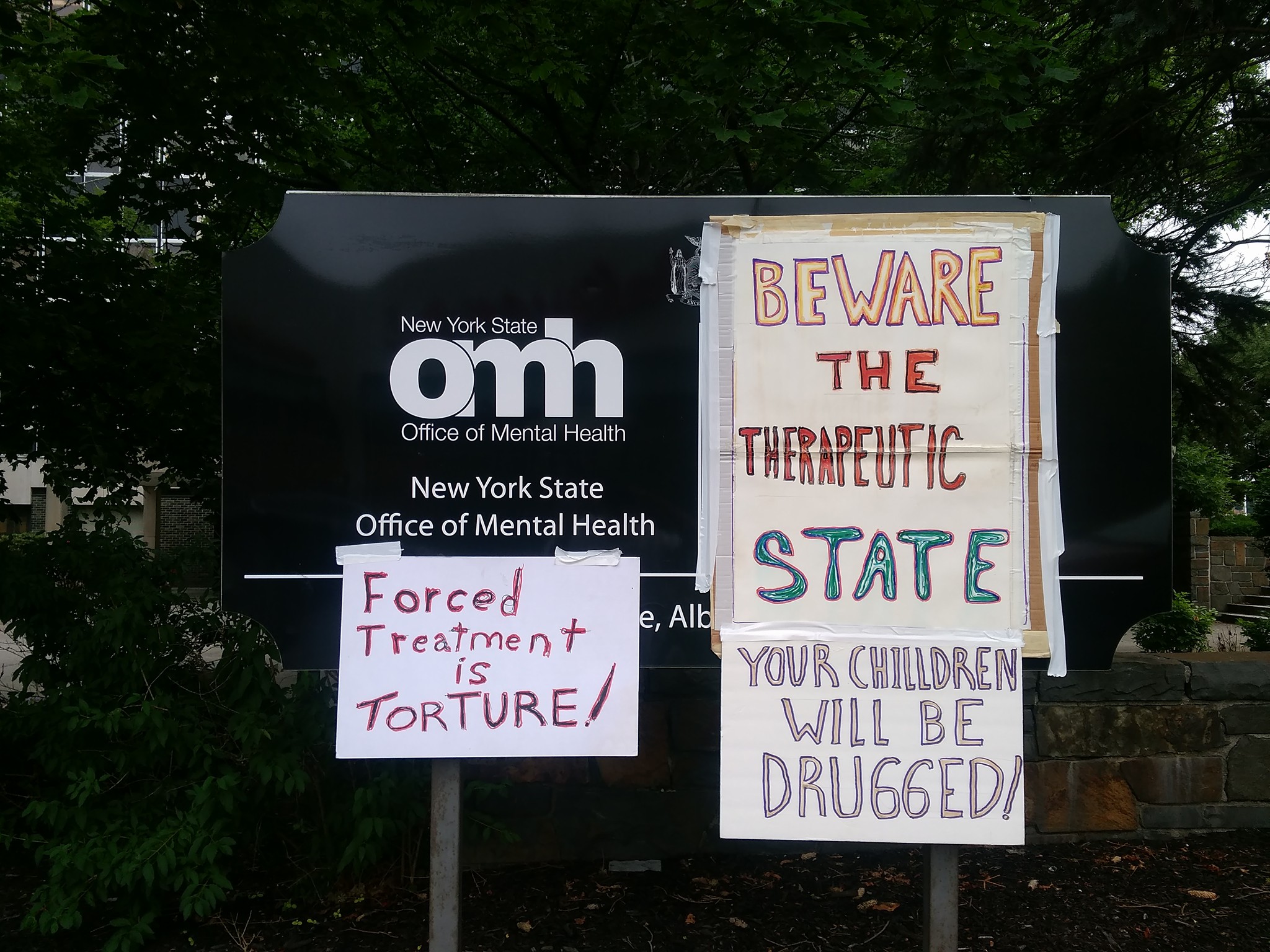
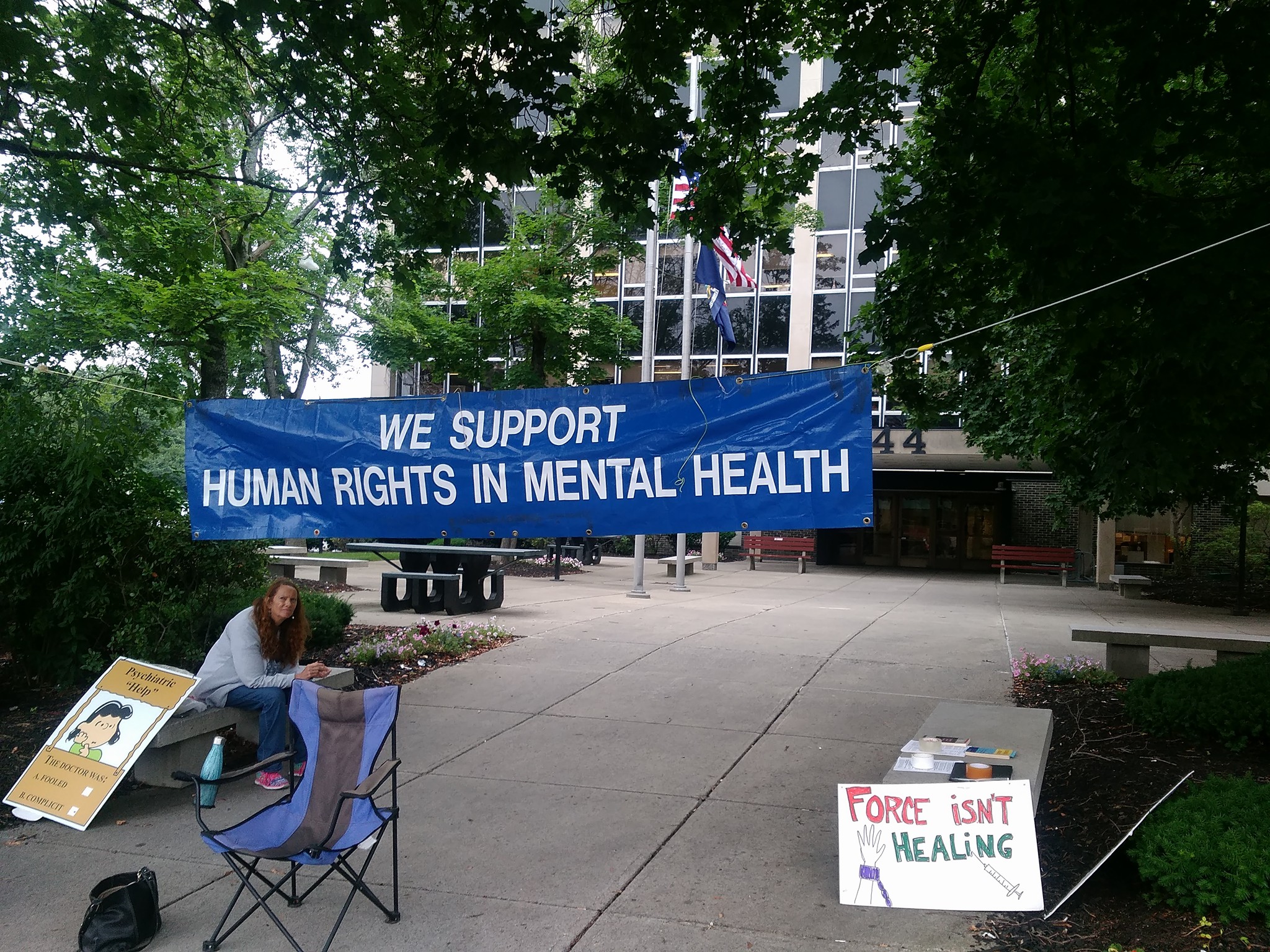
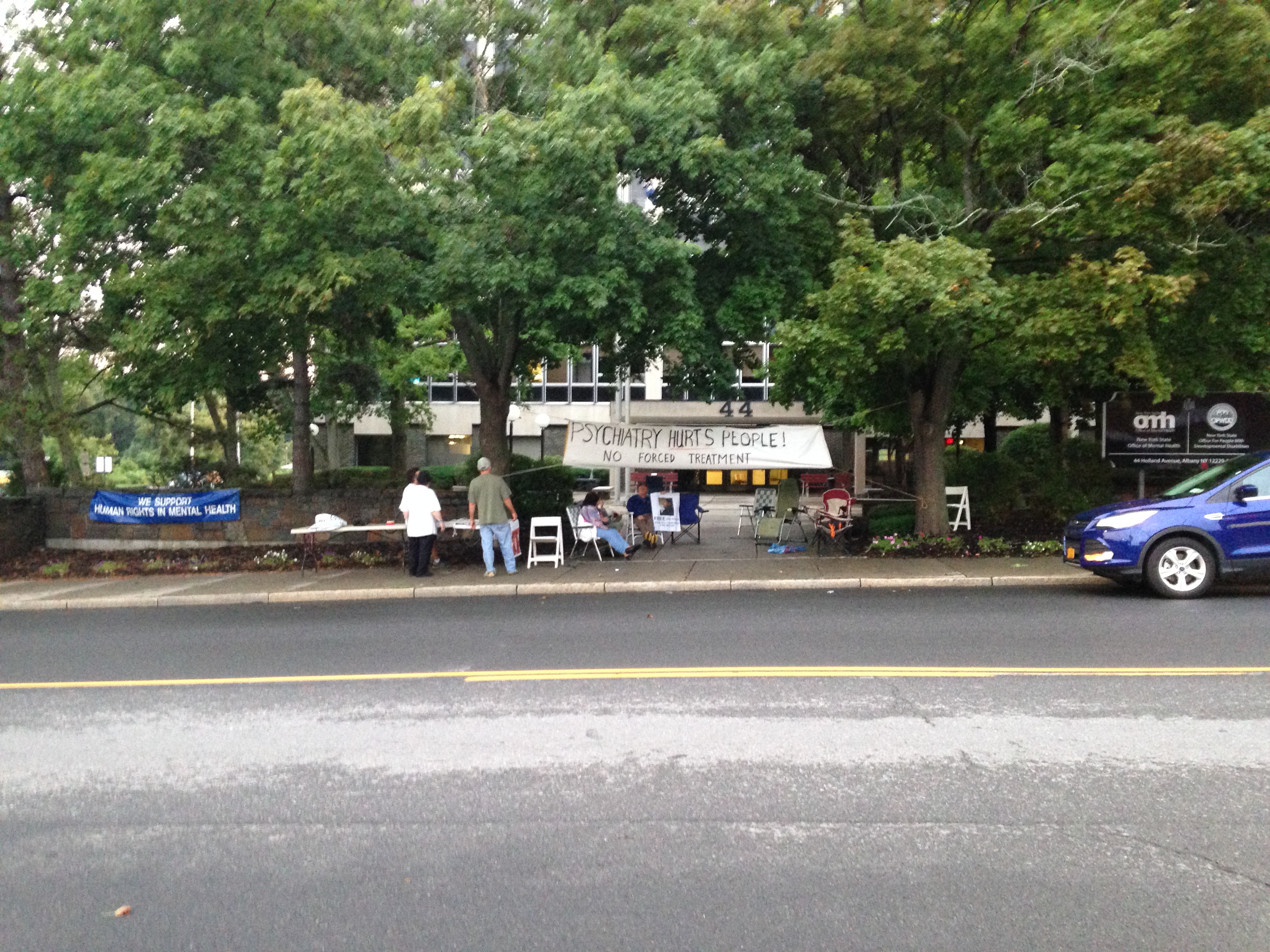
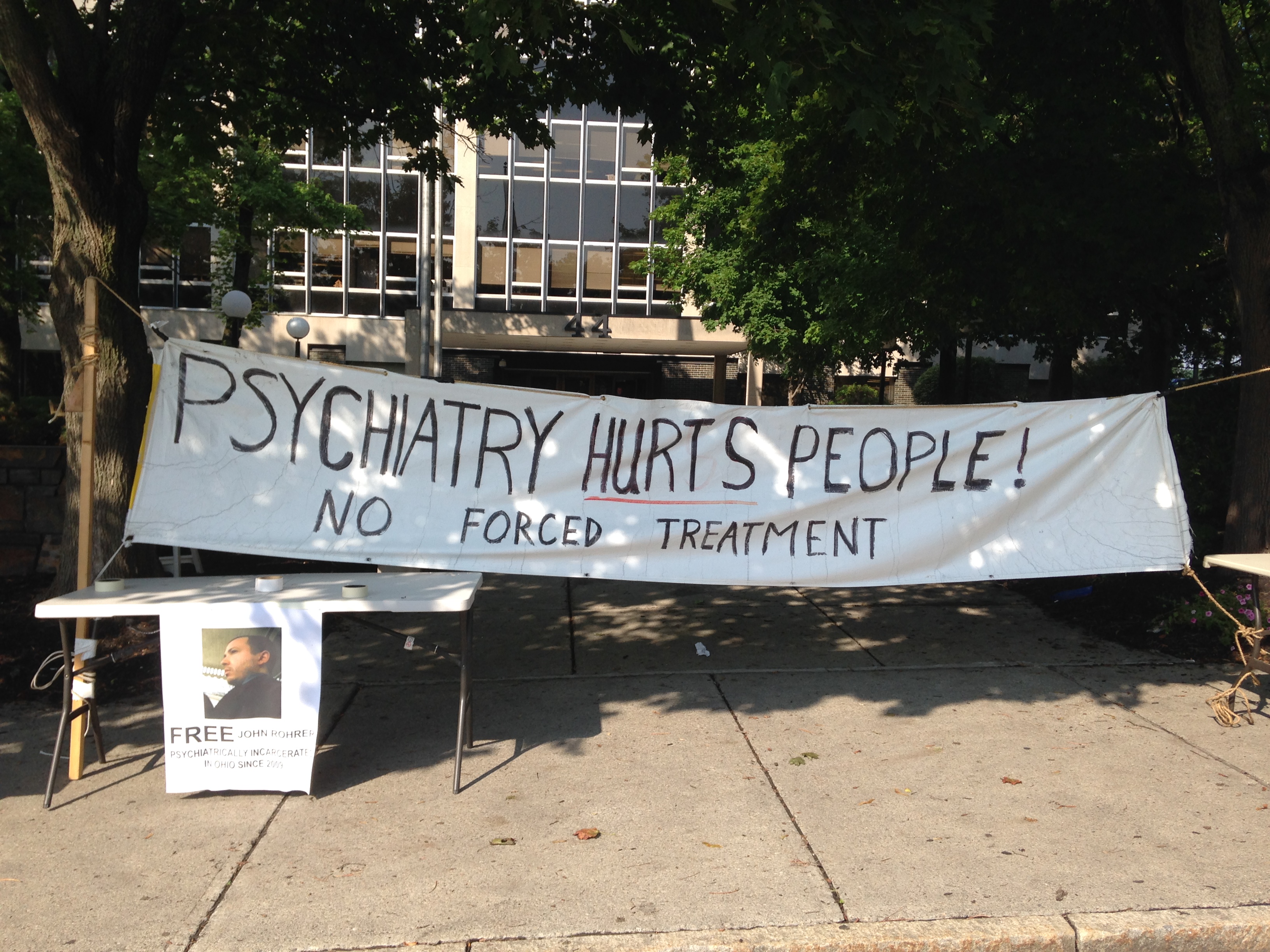
Sunday at 6 pm, we strung our banner in between two trees directly in front of the New York Department of Mental Health in Albany. A tall person would have had to duck slightly to enter. It said PSYCHIATRY HURTS PEOPLE! NO FORCED TREATMENT. I went across the street to take a picture and thought it was one of the best things I had ever seen. Shortly after seven on Monday morning, a security guard in a uniform and some type of administrator in a shirt and tie that appeared equally uniform emerge from the main entrance to tell us we cannot tie our banner to their trees. The trees, apparently, are private property. The private property of a state institution. Lauren presents the uniform and the suit with this argument without too much difficulty. Both men scowl and retreat, seemingly baffled by our lack of deference to their carefully class appropriate appearances.
A short time later, two uniforms emerge and inform us that the police will be called unless we move the banner. This time, one of the uniforms is female. Evidently, she is in charge of some kind of safety at the facility. Since they seem to be unable to state definitively that we are blocking an entrance, she asserts that our banner presents a safety issue. Someone could hit their head on our banner. Our FABRIC banner. She is a small woman in the traditional uniform of the patriarchy. Like many uniform women, she over corrects and delivers the news that unless we move our banner, the police will be called with more asshole in her tone than most men would use. We debate on what to do. George comes up with the idea of taping his stilts to the opposite ends of two display tables and tying our banner to that, with room on both sides for folks to enter and exit. We settle on obstruction.
A homeless man gives me a dollar “for the Movement”. A city worker stops her work and asks us about solutions for her nephew who “has got a lot of problems”. After chatting about alternative resources for a few minutes, she admits that she “has mental problems” and feels she needs help, but does not feel that anyone can really do anything to make her situation better. She is afraid to seek “medical” help and fears shewill be pressured to medicate. We give her some resources and invite her to stop back when she is off of the clock to talk more.
She had never heard of any alternative resources, and desperately needed some hope. A man who works with incident reporting stops on the way in to let us know we have been doing what we are doing for years and people inside the building are still doing things the same way. He suggests that this indicates what we are doing is not working. This is the thirty-fourth annual Bastille Day, to be precise. He argues with me a little about perceptions, then admits that psychiatry kills lots of people. Will he be interviewed on Talk with Tenney? No, he would certainly lose his job. What about a print article with a journalist? No. Psychiatry kills lots of people. He monitors the incidents. If he tells the truth about what he really does, he will no longer collect the paycheck that allows him to consume more things in a week than institutionalized people see in a year. Just so damn wrong.
There are many humans with struggles similar to the city worker and the New York state incident reporter. I can feel them inside of my survivor skin at the damp coming of that second day, there on Holland Avenue in Albany. They twist like the snakes that plagued me in my last real attempt at withdrawl. That whole night is a little foggy for me, but I did tell a story to Lauren, George and Kathy. Many activists in our movement talk a lot. Their voices are needed. A witness must be close to silent. This is something I learned as a clinician in a parallel universe. Lauren, George and Kathy were close to silent.
On July 28, 2003, I lost my shit. After many years of more downs than ups and many downers, my longtime boyfriend, who was incidentally Eimer’s father, decided that I had simply gone too far in what he termed my “manipulation” of the “therapist” he had hand picked for me. The therapist who started every session with a “check-in” about whether or not I had used drugs, drunk alcohol, eaten sugar, stuck to my exercise plan, taken my medication and been honest with my psychiatrist. A few times I questioned this regime. She would ask, “Do you want to think clearly?” A few times I refused. She stopped the session and billed me anyway. “Billing” sounds so close to “bullying”.
The particular day was hot, an ominous prelude to global warming. The therapist had, in the past few days, dismissed me permanently for refusing to participate. I was at lunch at my boyfriend’s house during a break from my mental health case management job, feeling powerful, unstable and defiant. He was recently retired from a similar position. “I never realized you were so manipulative. I did not think you were that much of a borderline. I feel really unsafe with you. I don’t know that I can continue our relationship.” This guy was really good at “I statements”. He retired to the kitchen to make his lunch.
Within a few minutes, I was completely undone and begging him to have me admitted to the locked ward in lieu of leaving me. I promised to get help. I promised to accept direction. I promised my future and my life without realizing how abusively and literally I would be held to these promises. It took a few hours for me to be admitted on the basis of the psychotic and behavioral symptoms I feel I half described. In retrospect, these “symptoms” were the real illusion. Everyone acted on the basis of this illusion: the nurse who threatened to catheterize me if I refused to give a urine sample; the orderly who attempted to teach me how to correctly count the hours needed in between doses of tranquilizers. Even the kind ward nurse, Jason, who finally convinced me to take ALL of the tranquilizers, along with the atypical antipsychotics.
In peace, I blessed Jason and drifted away around 5:30 pm. When I came around in the early morning, I was being raped and beaten by an individual served by the mental health agency where I worked. He was an inmate of the same ward. I was completely sober, bloody, bruised and hysterical when nurse Cathy found me in the bathroom without a door. “This is what happens when we throw ourselves out of bed because we are not getting the drugs we want.” I agreed and asked for more tranquilizers. Within a few hours, I was moved from the “acute” ward to the “stress reduction” ward.
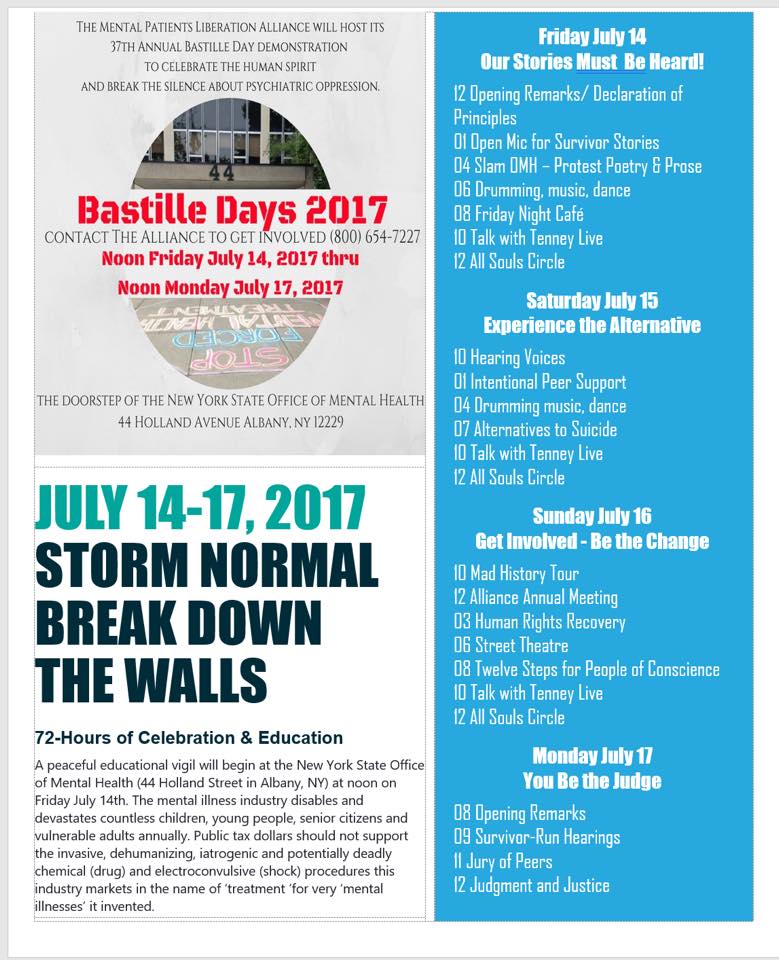
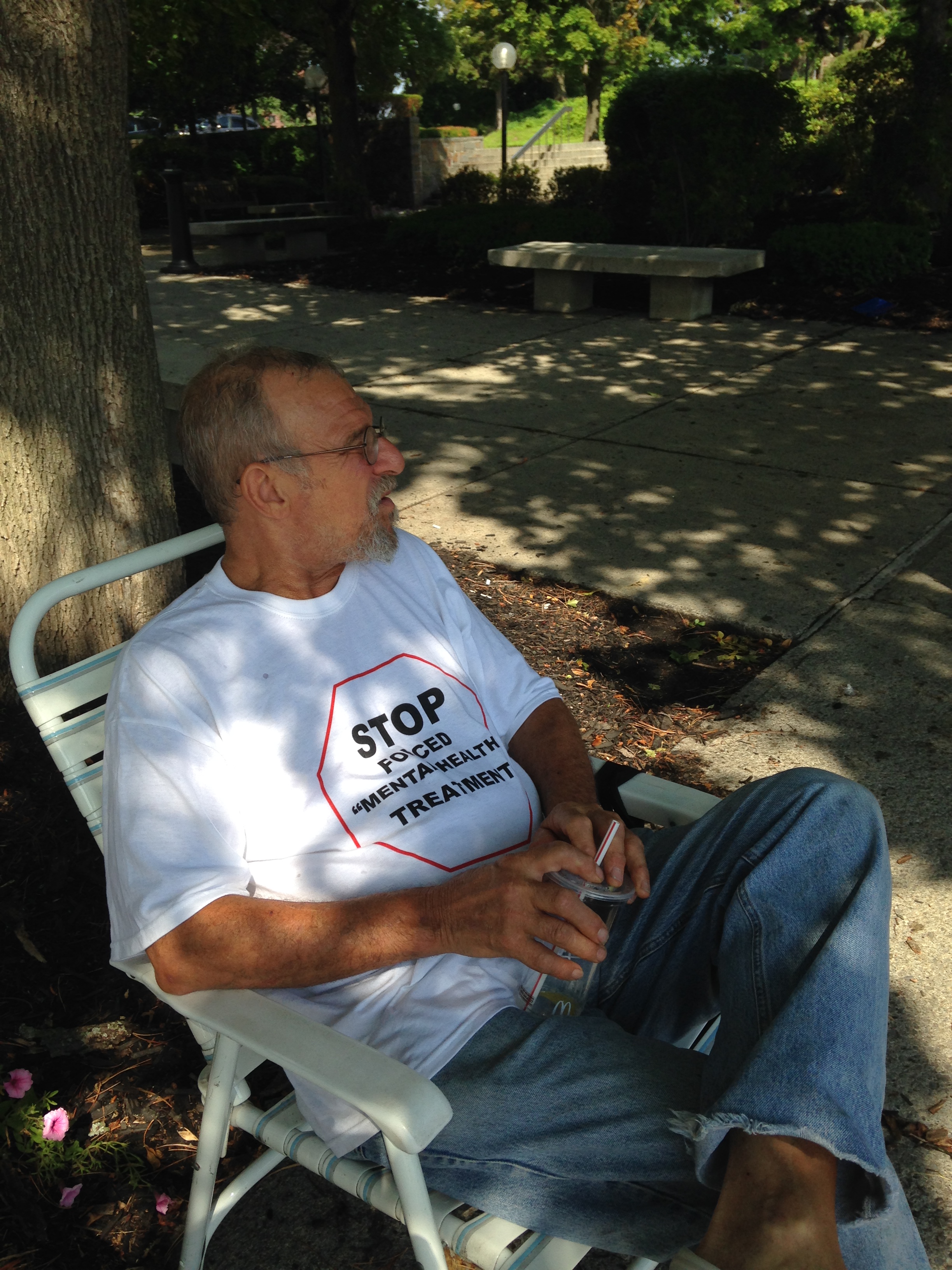
I was never so undone until Eimer’s death, close to exactly seven years later. The ward had unwittingly made a radical. At Bastille Day, in the early morning hours, I did not cry as I finished my story. I was almost silent, with my witnesses. There are many activists in our Movement who are much more qualified than I to discuss the purpose and platform of Bastille Day to the uninitiated reader. I would mention as salient the opposition to inpatient and outpatient forced treatment and drugging, the desire for an end to electroconvulsive therapy and hope for the recognition of our peers’ stories, as true peers. The Murphy bill and the Barber bill are essentially very expensive legal versions of the “good ward nurse” and the “bad ward nurse”. Whichever one gains our cooperation will result in our destruction. Patrick Kennedy as the keynote speaker at the next Alternatives Conference. These are things I will, at least temporarily, leave for those who can more fully understand and remark on the finer details. We held the vigil for 72 hours in honor of those who are held on wards without human rights for 72 hours, and much longer. And for our dead, who some of our activists work almost exclusively to memorialize. And for those of us who survive and witness.
At Bastille Day, there was love, pain, anger and much more among survivors. There was resistance to the psychiatric system that kills. I am only beginning to understand and accept the love.
My words, today, July 29, 2014.
Chronic movement: Last Relapse in Jersey
Here are aspects of being silenced. Aspects of being alive. Confessions of multiple suicide attempt, multiple overdose and multiple diagnoses survivors. Confessions of the Chronic. Not the trendy kind that end with the protagonist posing with the governor of some god forsaken southern faction receiving his or her peer certification certificate and extolling the virtues of the (insert 12 step program or trendy, monetized thought control mechanism here) that saved him or her from a certain death.
Being a suicide survivor has become even trendy of late. I don’t mean the kind of suicide survivor who has lost a dear family member or friend to a completed suicide–the kind of hits you get on the first twelve google links when you search “suicide survivor”. I mean person who has attempted to complete suicide, and survived…individuals for whom an incomplete suicide is as simple as their many other incomplete life events…relationships, careers and degrees. It is as simply gone as the missing pieces of their swiss cheese psyches.
Not all suicide survivors are grateful. Not all of us have “recovery”. No, we have not found any kind of religion in middle age; and, we have not lost the extra weight from the Zyprexa and become a yoga instructors, although we have tried. Our last suicide attempts are not in the memorial place of our roaring twenties. Our attempts were, perhaps, last week. We are not in recovery from drugs, prescription or street. We are firmly in relapse. The last time we woke up, surprised to have our feet still firmly planted on Earth, was in a leaky, cheap motel room somewhere in the Northwest, or the South, or South America, or India. It was early this year, or late last Fall, or on a perfectly beautiful day, July 16, 2010, a Friday, when it seemed the whole world might be grateful for the release of a temperate weekend.
Some of us were, understandably, looking for attention, just as you have accused us of doing in so many cliches, and now memes. Why not? Many of our families have abandoned us. We have lacked the boundaries to keep our lovers and rapists from using our bodies in such indiscriminate ways that it is necessary, finally, to affirm that our bodies are ours to dispose of as we see fit. We pretend a great deal that our suicide attempts, our overdoses, our fits of cutting rage do not happen. We pretend that New York City is the same thirteen years post nine eleven; but, we know she is begging for a relapse. The Lincoln tunnel into the seediest part of Jersey is a mistake, of course.
We never intended to use the syringe secretly stolen from a diabetic friend, and planned to stay at the Holiday Inn on the last of our bad credit. The Maplewood Motel, with its pink walls and electric blue carpet and $30 rate for three hours during the day is another foible, naturally, brought on by the fatigue of a drive through Manhattan at rush hour, along with the general lack of life, recovery and planning skills for which we have been berated over the years. That bag of Heroin, boldly purchased from a stranger at a nearby Shell station? It does not exist. We are out of practice, hit a nerve, and bleed profusely on the dirty sheets.
We do not meditate, we do not WRAP, our emotions do not respond to CPR and our peers mostly sell us out for the $10 an hour jobs offered by the system in exchange for their truths. In more cliches and more memes, they tell us we do not try hard enough. Just one more wellness plan, one more meeting, one more shot at a community college that promises to somehow materialize for us jobs just above the subsistence level. It would be a lucky thing for us to get these jobs, we of the tribe of spoiled identities. For these institutions, we are a sure thing. Our student loans are manifest destiny, with or without the nebulous kind-of-sort-of-pretty-decent job we are supposed to get. Hell’s bells, it is easier and cheaper to become a Certified Peer Specialist and live at the same socioeconomic status, or a little better without the never-ending loan payments. There is a little more money for the Chronic.
Chronic does not happen overnight. We may begin our Chronic Journey with hope for relief from the voices we know we are not supposed to hear, and definitely are not supposed to use. If only we remember to take the lavender pill in the morning and the green and white one at night, the voices will stop clanging in our metal skulls with the traffic noise and the screams of the children we aborted for fear of the sins of the mothers‘ lavender pills, and green and white pills, being visited on the children.
We go complacently, initially, into institutions that promise to monitor our crisis behavior and label it with something that looks like the Target logo. Then the treatment begins, and it never ends. It is not so much treatment as it is throwing shit at the Target marquee and hoping some of it sticks.
We are copiously mourned by our sisters turned therapists. These sisters hope to minister to the Chronics, but soon burn out on being mere adjunct supports to a powerful system that holds our Chronic brothers and sisters in a vise of inadequacy and shame. Let’s start with the little pill, but wait, it is not working. Here is a bigger handful of pills. We can have the whole can of generic Diet Ginger Ale to get them down if need be. Still no change? Still Chronic? Treatment resistant, perhaps? We will sedate you for the brain shocks you so desperately need. The nurse will put the needle in. She is not out of practice, but she may hit a nerve on purpose. We are not people, not even patients. We are the chronically ill, the unrepentant insane, and we deserve a little wake up call for needing so many services and still not being able to get our shit together.
Some of us are lucky enough to make it to middle age before our capacity to perform an almost good enough dog and pony show goes completely out of the twenty-seventh story window, like those poor souls in the twin towers who had the choice to burn or jump. A few of us jump. More of us burn. Many identify an earlier time when we wish that we would have jumped. It is somewhat unclear why we feel the time has passed, but we struggle on anyway, on fire with the pain in our heads and bodies, looking for another open window. It seems so hard to find.
Many of us are dead already, cremated by families that didn’t want us and shut up forever in the $40 cardboard urns. We burned, we hurt, we listened to the clanging and the screaming until we gave up on the lavender pill, the blue and green pill, the nurse with the needle and the therapy group where we are told, again, often by our peers, how desperately we failed to meet their acceptable standards. Whenever and however I die, cremate me, but don’t put me in the $40 urn. Roll me up with some blue Kush. Then, let the chronic speak.

The two pieces we have selected to share with readers of this project record the last years of fundamental resistance in the U.S. movement for the liberation of survivors of contemporary
psychiatric and behavioral health atrocities, as well a specific period in the life of a woman activist of that movement, Sharon Jean. Both were written in 2014, as she processed the realization that the movement she had chosen to follow was at the end of what had been a slow an ongoing decline. Further, she was coming to an understanding that the choice she made to publicly participate in this liberation movement had irrevocably changed the course of her future.
“Bastille Day” chronicles a seventy-two hour vigil that was held by the Mental Patients’ Liberation Alliance of Upstate New York in front of the New York State Department of Mental Hygiene in Albany for over forty years. Following the 2014 vigil, MPLA would be active in Utica for only a few more years. At the time of the 2014 vigil, Sharon Jean was living at the Alliance building and doing various work of the movement such as assisting individuals fleeing from forced treatment orders in New York City as a result of “Kendra’s Law”, which had recently ushered in some of the most draconian mental health legislation in the US. “Chronic” is a personal account of one night in the life of a woman activist on the fringes of this dying movement, offering a glimpse into the loneliness and alienation inherent in the lives of such women, and rarely discussed. Sharon Jean asserts her claim on the identity of “chronic”, while simultaneously demanding a dignified existence for all “chronics”. In the years since writing this piece, Sharon Jean has ceased to link her identity to this deficit models. However, the importance of this piece in the history of her activism remains.
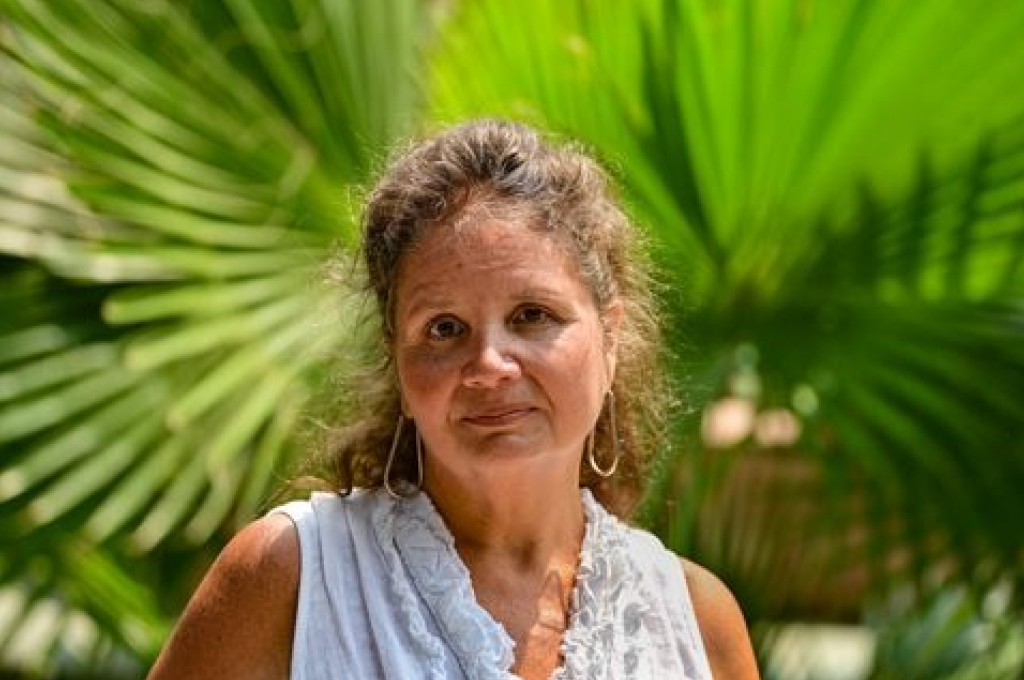
Sharon Jean Cretsinger is a North American essayist, disability rights advocate, mental health clinician, and survivor of contemporary psychiatric and behavioral health atrocities. She was educated at Iowa State University, The University of Akron, The University of Massachusetts at Amherst, and Kent State University and holds master’s degrees in English and social work, and a graduate certificate in educational technology.
Her work emerges from distinct historical periods rather than a continuous professional narrative. Sharon Jean has more than thirty years of professional experience within U.S. systems of mental health care, while simultaneously living under psychiatric labelling resulting in chemical restraint, institutional rape, and long-term familial alienation. In 2013, she was formally de-credentialed by a state licensing board as a result of being reported for “impaired practice” by a sanist clinical supervisor. This marked an abrupt institutional rupture that redirected her work outside licensed frameworks.
She subsequently entered an extended period of activist labor and exile in Latin America. These years were shaped by survivor and ex-patient liberation movement-based work, and the development of non-institutional forms of knowledge. In 2020, Sharon Jean’s best writings were suppressed and erased by co-opted factions of her own movement, the very structures that claimed solidarity and emancipatory aims. This rupture forms a central fault line in her archive, informing her sustained critique of all movements that reproduce carceral, psychiatric, or managerial power under the language of care. Across visual and written forms, Sharon Jean is concerned with coexistence of competing narratives, survivorship without appeal, and the ethics of representation when interpretation itself has historically been a site of harm.
Identity in this work is not stabilized for institutional comfort, nor displayed for spectacle. It is permitted to remain dense, simultaneous, and unresolved. Her clinical work is oriented toward descriptive accuracy and the belief that systems able to describe and understand themselves gain agency and power in all they do. Her new work, Better Birthdays: Harm Reduction Conversations with Youth Surviving Attachment Trauma, will be available in 2027.


Leave a Reply